Quick summary
Summarize this blog with AI

In today’s rapidly evolving business landscape, artificial intelligence (AI) is playing a pivotal role in driving success and growth.
According to a report by PwC Global- The total contribution of AI to the global economy is expected to hit $15.7 trillion by 2030.
AI is becoming an increasingly popular tool for businesses of all sizes due to its ability to automate and streamline processes, improve decision-making, and reduce costs.
Through natural language processing (NLP), NLP enables computers to understand human language and interpret text-based data, allowing businesses to quickly analyze large amounts of data and extract valuable insights.
AI-driven automation tools are becoming increasingly popular for streamlining complex business processes such as financial management and human resource management.
Automation can save time and money while improving accuracy and efficiency across a variety of business functions.
By leveraging the power of AI for decision making, businesses can gain a competitive edge in today’s fast-paced environment.
This article explores five compelling examples of how AI can empower businesses to make better decisions.
Anxious about how to integrate AI into your data-driven culture? Check out skills.ai: Effortlessly drive collaboration & empower your team with analytics charts, insights & KPIs in seconds.
1. Efficient Customer Support with AI Chatbots
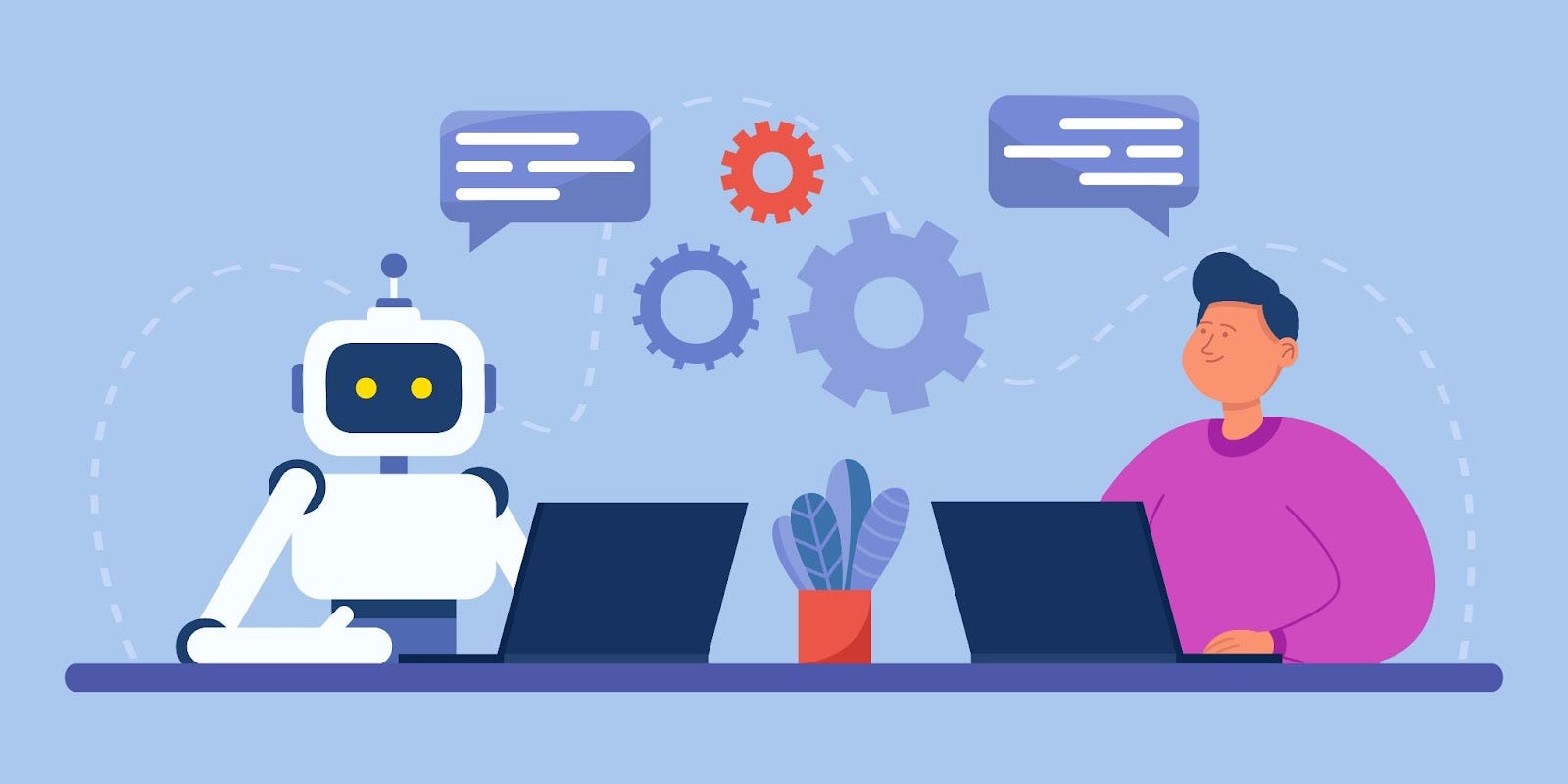
Image by pch.vector on Freepik
AI-powered chatbots can significantly improve customer support by enabling businesses to create a hybrid model that optimizes operations.
These advanced AI chatbots can handle frequently asked questions and provide instant responses, ensuring round-the-clock availability.
This allows businesses to offer prompt support even outside of regular working hours, freeing up human agents to focus on more complex tasks.
Implementing AI chatbots in customer support not only improves response times but also enhances efficiency and reduces costs.
Machine learning algorithms enable chatbots to learn and improve over time, becoming more accurate and effective in addressing customer queries.
Analyzing customer interactions with the chatbot provides valuable insights for businesses to refine services and anticipate customer needs.
AI chatbots can lead to enhanced customer satisfaction, increased scalability, and improved budget planning.
2. Intelligent Product Placement

Product placement is a critical strategy for businesses looking to drive sales and increase revenue.
However, determining the optimal product placement can be challenging, requiring a deep understanding of customer behavior and preferences.
With AI-powered tools, businesses can analyze store images to gain insights into the most effective product display strategies.
By leveraging AI, a front-of-store manager can receive recommendations on optimal product placement, leading to improved customer engagement and increased revenue.
These ai powered tools help businesses make data-driven decisions, reducing the risk of lost sales due to poor product placement.
3. Optimized Supply Chain Management

Supply chain management is a complex process that involves managing multiple suppliers, vendors, and partners.
AI can significantly impact supply chain decision-making by analyzing vast amounts of data to provide insights and recommendations.
For example, an AI system can advise buyers on the best purchasing decisions, such as when to procure materials or find cost-effective alternatives.
By leveraging AI-powered supply chain management, businesses can reduce costs, enhance efficiency, and make data-driven decisions.
This can enable businesses to respond quickly to changes in the market and remain competitive. Additionally, AI can automate labour-intensive processes, freeing up employees to focus on more complex tasks.
This can ultimately lead to improved customer satisfaction, reduced operational costs, and increased profit margins.
4. Streamlined Quality Control

Quality control is crucial for businesses across industries. However, traditional quality control methods can be time-consuming and prone to errors.
AI can automate and improve this process by scanning images and identifying defects.
Whether it’s detecting tears in fabric for a T-shirt manufacturer or ensuring the quality of cakes in a bakery, AI-powered systems can streamline quality control, reducing errors and maintaining high standards.
By leveraging AI-powered quality control, businesses can reduce costs, enhance efficiency, and maintain high-quality standards.
5. Custom AI Systems for Small Businesses

Image by Freepik
Traditionally, building AI systems required extensive coding expertise. However, emerging AI development platforms are changing this landscape.
These platforms prioritize data input over complex coding, making it accessible for individuals without extensive technical knowledge.
Small business owners can now leverage AI to address their unique challenges and make data-driven decisions.
From demand forecasting to supply chain management and quality control, AI empowers small businesses to make better decisions and thrive in the digital era.
6. Enhanced Demand Forecasting

Image by Freepik
Another example of how AI can help businesses make better decisions is through predictive analytics.
Predictive analytics uses data from past experiences and current trends to predict future outcomes.
This can be used to forecast customer demand, identify new market opportunities, and determine the best strategies for growth.
Additionally, predictive analytics can provide insights into customer behavior and preferences to inform marketing strategies.
Traditional methods of demand forecasting can be unreliable, leading to overstocked or understocked inventory.
AI can revolutionize demand forecasting by analyzing data from various sources such as social media trends and customer behavior.
By leveraging AI data analytics co-pilot tools like Skills.ai, businesses can analyze vast amounts of data to identify patterns, trends, and insights in seconds.
With AI-powered demand forecasting, businesses can make data-driven decisions, reducing the risk of lost sales due to understocking or overstocking.
For example, a T-shirt company can use AI to identify popular trends and create designs that resonate with customers, ultimately driving sales.
7. No-code Data Analytics with AI

Image by fullvector on Freepik
No-code AI data analytics tools are revolutionizing the way business users harness the power of data.
With these tools, business users without extensive technical expertise can leverage AI capabilities to analyze and derive valuable insights from their data.
By eliminating the need for coding, these tools provide an intuitive interface that allows users to easily navigate and explore data, run complex analyses, and generate visualizations.
Business users can now gain crucial insights, KPIs, make data-driven decisions and uncover hidden trends and patterns that drive business success.
No-code AI powered data analytics tools like Skill.ai’s Data chat make data analytics as easy as texting, empowering business users to be more self-sufficient, reducing dependency on data scientists or analysts, and accelerating the pace of data backed decision-making in a fast-paced business environment.
Conclusion

AI has immense transformative potential in business decision-making. By embracing artificial intelligence and Ai based tools, small businesses can leverage this technology to drive
growth, optimize operations, and enhance customer experiences. Embrace the power of AI and unlock the limitless possibilities it holds for your business’s success.
AI enables businesses to access and analyze vast amounts of data quickly and accurately, allowing them to make informed decisions faster and more efficiently and allowing
businesses to deliver personalized customer experiences, leading to higher levels of customer satisfaction and loyalty.
Anxious about how to integrate AI into your data-driven culture? Check out skills.ai: Effortlessly drive collaboration & empower your team with analytics charts, insights & KPIs in seconds.